Men’s Quartz Chronograph Watches: Category Overview and Buying Context
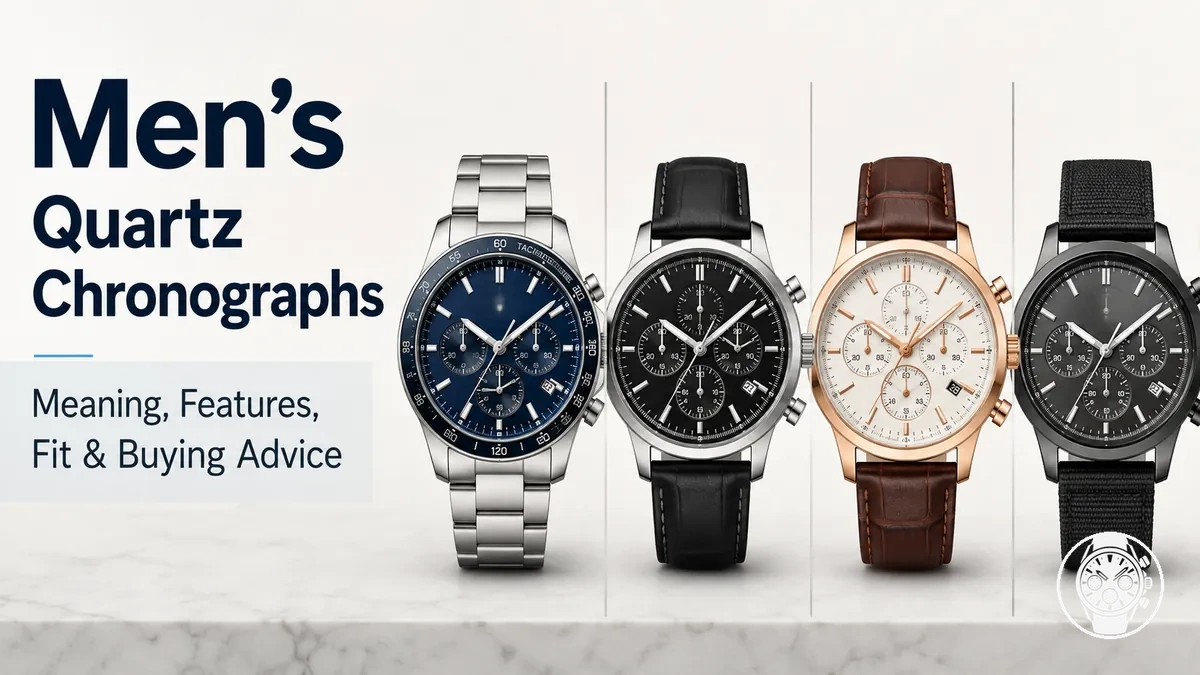
Men’s quartz chronograph watches are analogue wristwatches that combine a quartz movement with a chronograph function, allowing the watch to display the time while also measuring elapsed time with dedicated pushers and subdials. According to Seiko, a quartz movement keeps time by regulating an electronic oscillator with a quartz crystal powered by a battery, while the chronograph function operates as an independent stopwatch. Quartz identifies the movement technology, whereas chronograph identifies the timing complication. This category is intended to support buying decisions by explaining the features, evaluation criteria, and intended use of men’s quartz chronograph watches rather than presenting individual products.
Quartz identifies the movement technology, whereas chronograph identifies the timing complication.
In a typical buying context, men’s quartz chronograph watches are compared by movement type, case size, strap material, water resistance, display layout, materials, and price range. According to ISO 22810, water-resistance markings indicate the level of water exposure a watch is designed to withstand under specified test conditions, but the rating does not mean every model is suitable for swimming or diving. For example, a watch marked 50 m is generally intended for everyday water exposure such as rain or hand washing, while models rated 100 m or more are commonly designed for recreational swimming when specified by the manufacturer. These characteristics collectively determine comfort, durability, suitability for daily wear, and overall value.
These characteristics collectively determine comfort, durability, suitability for daily wear, and overall value.
Men’s quartz chronograph watches are generally suitable for buyers who want accurate battery-powered timekeeping together with stopwatch functionality in one watch. For example, many models are available with case sizes ranging from approximately 38 mm to 46 mm, allowing buyers to choose a proportion that better matches wrist size and wearing preference according to manufacturer specifications. The following sections explain each feature in greater detail so you can evaluate category differences before comparing individual watches.
- Category meaning: Quartz movement provides battery-powered timekeeping, while the chronograph function measures elapsed time.
- Core design elements: Subdials, pushers, date display, case size, and strap influence usability and appearance.
- Evaluation criteria: Water resistance, materials, movement quality, feature relevance, and price range should be assessed together.
- Buying context: The purpose is to understand category differences before narrowing choices to individual models.
Table of Contents
What a Men’s Quartz Chronograph Watch Is
A men’s quartz chronograph watch is a battery-powered wristwatch that uses a quartz movement for regular timekeeping and a chronograph function for stopwatch timing. According to Seiko, a quartz movement keeps time through a battery-powered electronic circuit regulated by a quartz crystal, while the chronograph function measures elapsed time independently of the main time display. Quartz describes the movement type, whereas chronograph describes the timing function, so the two terms identify different characteristics of the same watch.
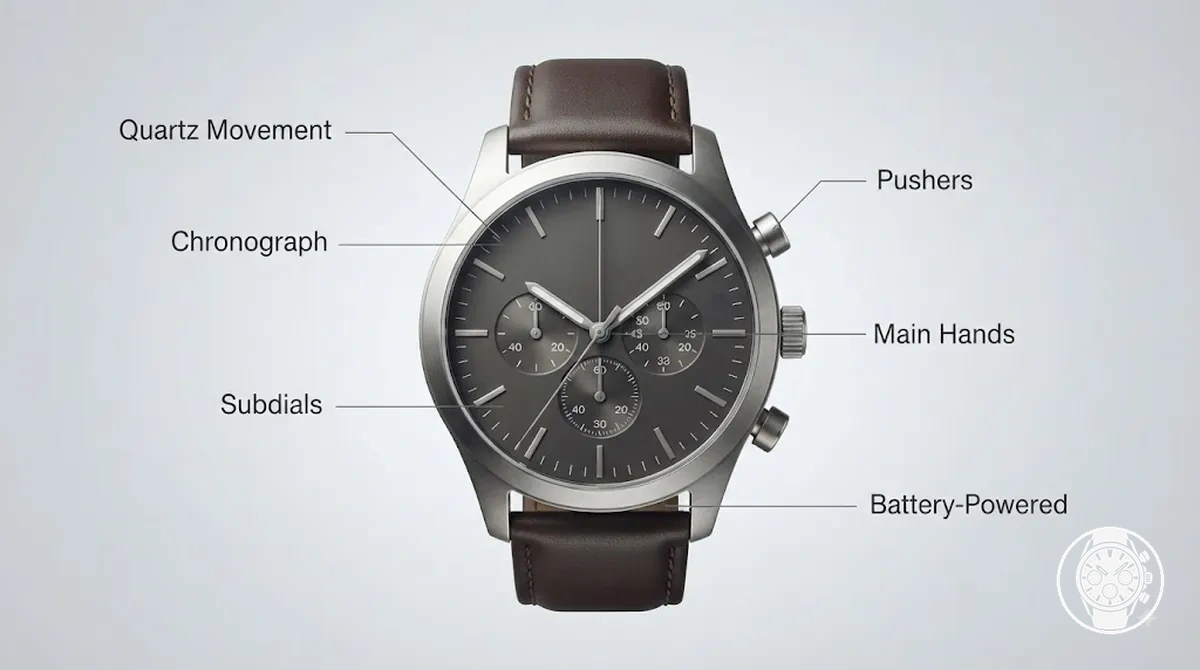
A men’s quartz chronograph watch normally includes a central time display together with subdials and external pushers that start, stop, and reset stopwatch timing. According to Seiko, the chronograph operates independently from the regular time display, allowing elapsed time to be measured without affecting normal timekeeping. For a detailed explanation of these concepts, see quartz chronograph basics.
For a detailed explanation of these concepts, see quartz chronograph basics .
For example, a runner can start the chronograph before a training session and stop it after 15 minutes while the main hands continue showing the current time. The 15-minute reading is produced by the chronograph function, not the quartz movement, which illustrates why understanding the movement-versus-function distinction is important before comparing watch features or evaluating different models.
Quartz Chronograph Features and Dial Functions
Quartz chronograph features combine timing controls, dial functions, and physical components that determine how a men's quartz chronograph watch performs for elapsed-time measurement, readability, durability, and buying evaluation. According to Seiko, the chronograph function measures elapsed time independently from normal timekeeping, while ISO 22810 defines water-resistance ratings under standardised test conditions rather than as a universal waterproof claim. The most relevant feature families are timing functions, dial readability, movement expectations, and physical attributes.
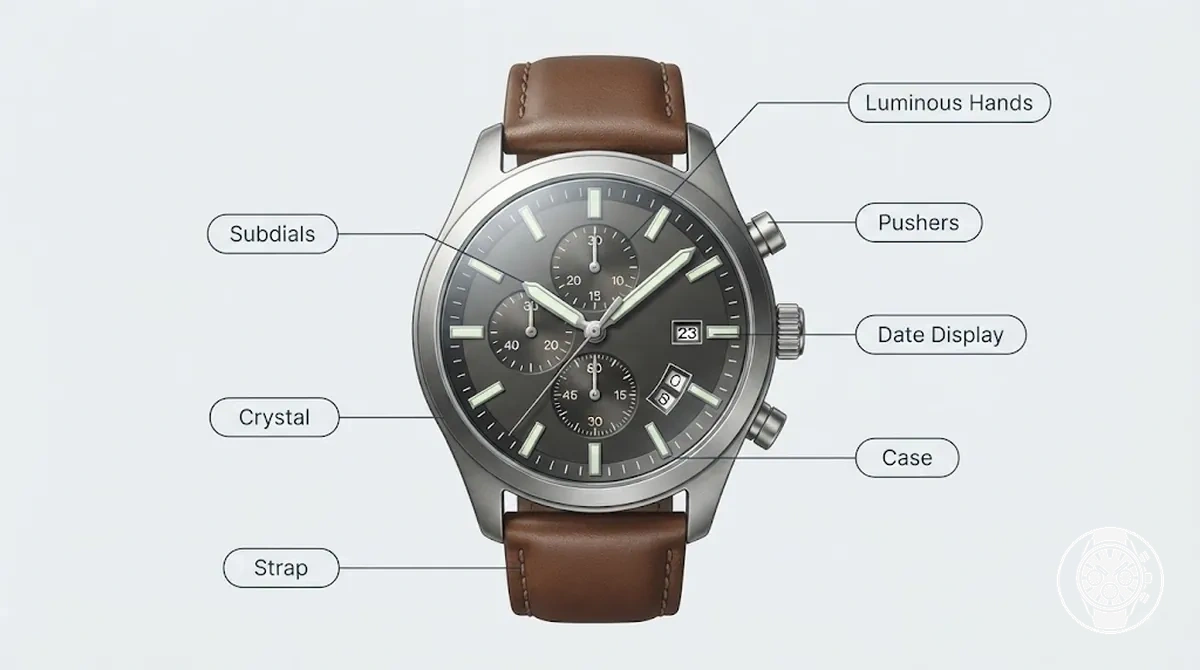
When comparing two watches in the same price range, grouping features by function makes the buying decision easier than comparing long specification lists. For example, a watch with luminous hands, a date display, and a 100 m water-resistance rating, as classified under ISO 22810 testing, is generally more suitable for recreational swimming than a similar model rated 50 m, while both remain appropriate for everyday wear within their intended conditions. Case material, crystal type, and strap construction should also be considered together because they influence wearing comfort and resistance to everyday use.
Quartz chronograph features are best understood through the relationship between each feature, its attribute, and its practical value.
Quartz chronograph features are best understood through the relationship between each feature, its attribute, and its practical value. The table below groups the main dial functions and physical attributes by buying relevance rather than listing isolated specifications.
| Feature or Part | Attribute | Value or Condition | Effect on Use or Choice |
|---|---|---|---|
| Subdials & Pushers | Stopwatch timing | Independent elapsed-time operation (Seiko) | Measures activities without interrupting normal time display |
| Date Display & Luminous Hands | Readability | Calendar visibility and improved low-light legibility | Makes daily time checking faster and easier |
| Case, Crystal & Strap | Durability & Comfort | Material varies by model and manufacturer | If matched to intended use, improves long-term wear and protection |
| Water Resistance | Protection Rating | Common ratings include 50 m and 100 m, depending on the model (ISO 22810) | Helps buyers judge suitable everyday or recreational water exposure |
Understanding how each feature contributes to usability is more valuable than comparing the total number of watch features. For a closer explanation of the visible controls, dial layout, and operating components, see chronograph parts and functions.
A common misconception is that more features automatically make a better watch.
A common misconception is that more features automatically make a better watch. In practice, purchase confidence comes from selecting the feature combination that matches the intended use, which the following H3 sections examine in greater detail.
Subdials, Pushers, Stopwatch Timing, and Date Display
Subdials, pushers, stopwatch timing, and date display are the visible controls that allow a men's quartz chronograph watch to measure elapsed time while maintaining normal time display. According to Seiko, the chronograph function operates independently of standard timekeeping, and the side pushers control the stopwatch by starting, stopping, and resetting the elapsed-time measurement. These visible controls support stopwatch timing without interrupting the main hands.
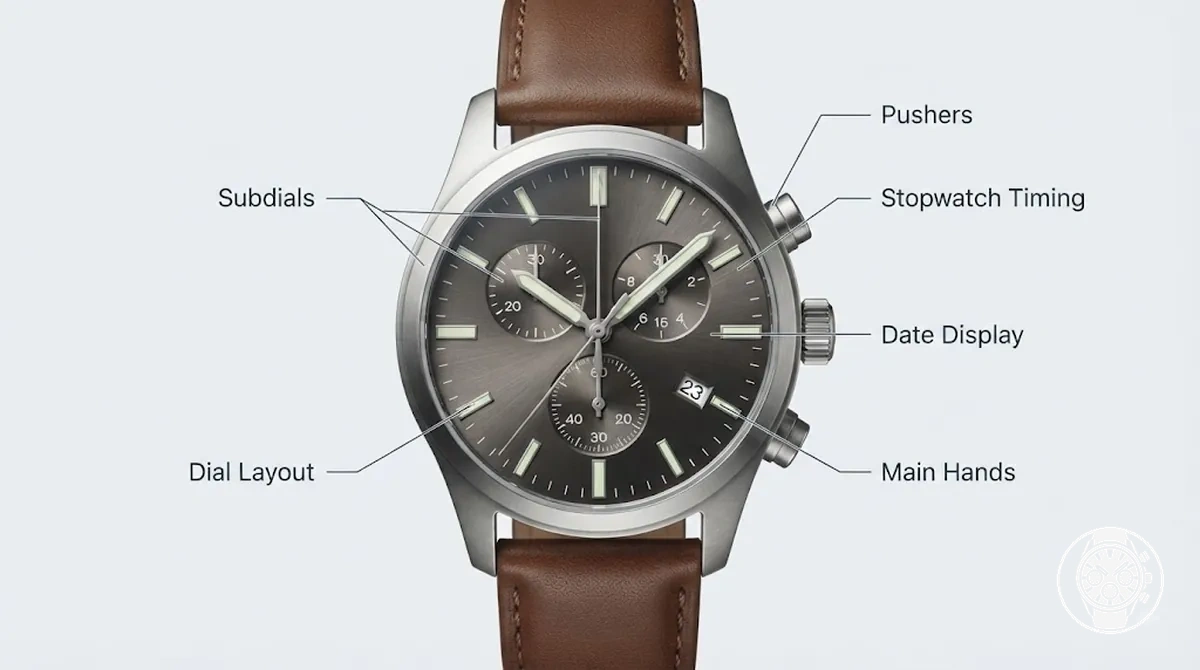
When comparing watches, buyers should interpret the dial layout by the purpose of each visible element rather than by the number of subdials alone. For example, many quartz chronograph movements include one running-seconds subdial together with elapsed-minute and, on some models, elapsed-hour counters, while a separate date display provides calendar information for everyday reading; the exact arrangement depends on the movement specified by the manufacturer. A watch with two timing subdials and a date window may appear less complex than a model with three subdials, improving legibility for buyers who prioritise quick reading over additional timing displays.
- Subdials: Show running seconds or elapsed stopwatch minutes and hours, depending on the movement, helping separate normal timekeeping from stopwatch timing.
- Pushers: Side buttons operate the chronograph by starting, stopping, and resetting elapsed-time measurement while the main hands continue displaying the current time.
- Date display: Displays the calendar date, improving everyday usability without affecting stopwatch operation.
- Dial layout: Additional timing displays can provide more elapsed-time information, but a simpler layout generally improves legibility and reduces perceived complexity.
More subdials do not automatically make a men's quartz chronograph watch more practical because the value depends on whether the additional timing display improves the intended use. After identifying the visible controls, see how to use the chronograph for practical operation guidance.
Quartz Movement, Accuracy, Battery, and Maintenance Expectations
Quartz movement in a men's quartz chronograph watch is a battery-powered movement designed to provide consistent timekeeping with comparatively low routine maintenance. According to Seiko, a quartz movement regulates time through an electronic circuit controlled by a vibrating quartz crystal, while battery replacement and long-term accuracy remain dependent on the movement design, battery type, and usage conditions. Battery life, accuracy, and service expectations therefore differ between watch models and manufacturers.
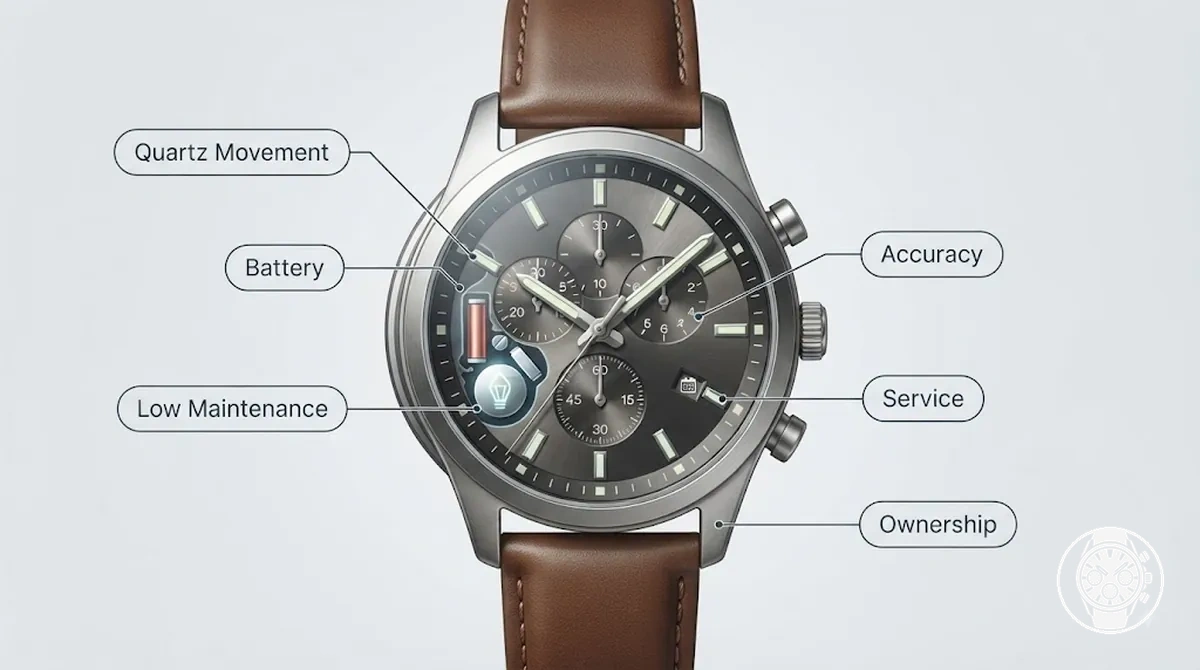
A quartz movement uses electrical energy supplied by a battery to power the watch, eliminating the need for manual winding while requiring periodic battery replacement as recommended by the manufacturer. According to Seiko, quartz technology delivers stable timekeeping by using a quartz crystal oscillator, but neither battery life nor long-term accuracy has a universal value because both depend on the movement specification, chronograph usage, battery capacity, operating conditions, and manufacturer servicing guidance. These characteristics make quartz chronograph watches a practical low-maintenance choice while still requiring occasional battery replacement and routine service checks to maintain ownership confidence.
| Expectation | What Affects It | Buying Implication |
|---|---|---|
| Accuracy | Quartz movement specification, operating temperature, and movement design | Compare manufacturer-stated accuracy rather than assuming identical performance across all models. |
| Battery Life | Battery type, chronograph operation, movement specification, and usage pattern | Frequent chronograph use can increase battery consumption, so compare manufacturer specifications before purchase. |
| Maintenance | Battery replacement schedule and manufacturer-recommended servicing | Routine upkeep is generally limited to periodic battery replacement and inspection instead of regular winding. |
Before comparing watches, review movement, accuracy, and battery life together because ownership expectations are determined by the complete movement specification rather than by a single feature. This comparison helps buyers evaluate convenience, expected upkeep, and long-term ownership confidence without assuming universal battery life or guaranteed accuracy.
Case, Crystal, Strap, Water Resistance, and Visibility Details
The case, crystal, strap, water resistance, and visibility details determine how a men's quartz chronograph watch performs across daily, dress, and sport use. Stainless steel is the most common case material because it combines corrosion resistance with everyday durability, while leather straps are typically selected for lighter, dress-oriented wear and stainless steel bracelets for frequent daily use. These physical details should be evaluated together because they influence durability, comfort, visibility, and style rather than representing universal indicators of quality.
| Physical Detail | Attribute | Condition | Effect on Suitability |
|---|---|---|---|
| Case | Material | Commonly stainless steel | Provides corrosion resistance and everyday durability while influencing overall weight and wrist comfort. |
| Crystal | Watch glass | Usually mineral crystal or sapphire crystal | Sapphire crystal generally offers greater scratch resistance than mineral crystal, but neither material is scratch-proof. |
| Strap | Strap material | Leather strap or stainless steel bracelet | Leather straps commonly suit dress wear, while stainless steel bracelets are often preferred for regular everyday use. |
| Water Resistance | Rating | Typically expressed as 30 m, 50 m, 100 m, or higher by the manufacturer | Indicates the intended level of water exposure under specified test conditions and should not be interpreted as an absolute waterproof guarantee. |
| Visibility | Luminous hands and dial contrast | Present on selected models | Improves readability in reduced-light conditions when luminous hands are paired with clear dial contrast. |
Water resistance should always be interpreted according to the manufacturer's stated rating rather than as a claim that a watch is waterproof. According to ISO 22810, water-resistance ratings are established under standardised laboratory test conditions, and suitability depends on the stated rating and intended activity rather than on the presence of seals alone. For example, a manufacturer-rated 50 m watch is generally intended for everyday water exposure, while a 100 m rating is commonly specified for recreational swimming; the appropriate use should always follow the manufacturer's guidance. Material and visibility features should therefore be assessed together because crystal type, strap material, luminous hands, and dial contrast each affect durability, comfort, readability, and practical suitability under different wearing conditions.
Fit, Case Size, and Wrist Proportion
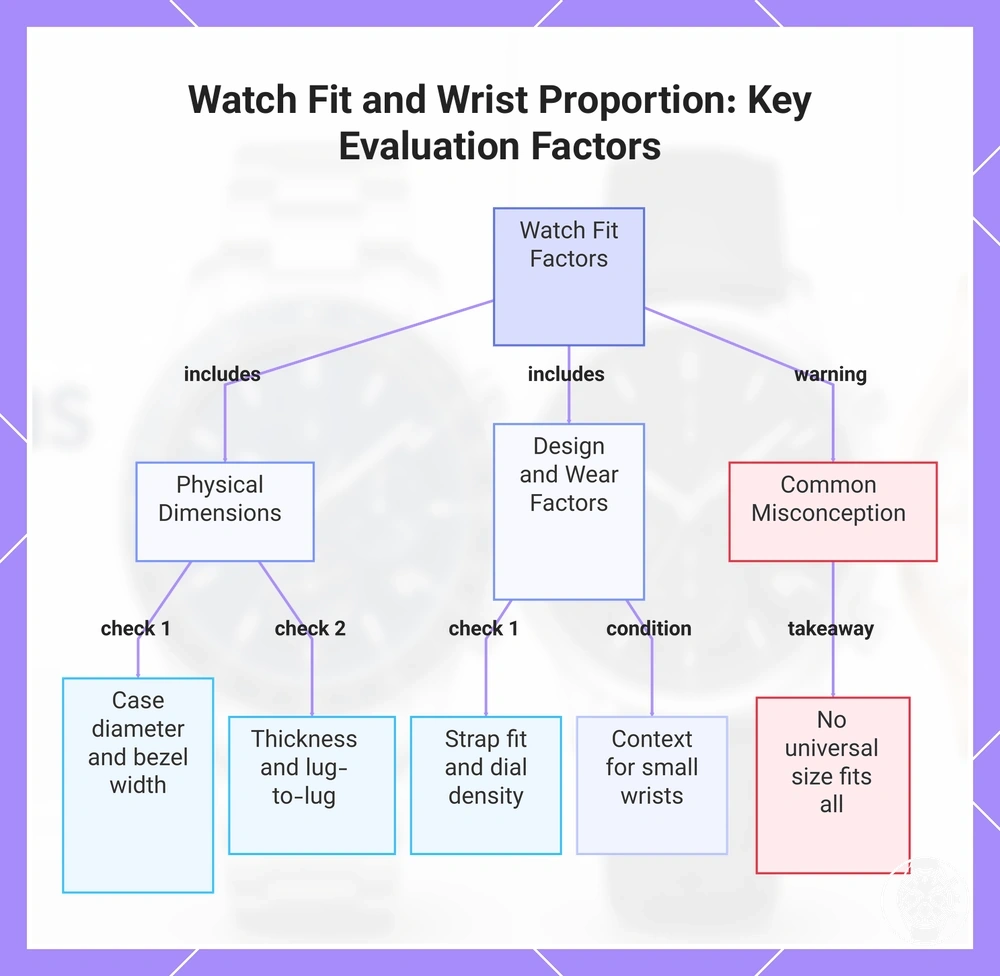
Fit, case size, and wrist proportion depend on how case diameter, thickness, lug-to-lug length, strap fit, and dial density work together rather than on a single measurement. According to watch-sizing guidance published by Seiko and other established watch manufacturers, no universal case diameter or wrist-size threshold guarantees a correct fit because wrist shape, case design, strap geometry, and personal wearing preference all influence comfort and visual balance. The correct fit should therefore be evaluated in the context of the wrist, the watch case, and the intended style of wear.
The correct fit should therefore be evaluated in the context of the wrist, the watch case, and the intended style of wear.
For example, two men's quartz chronograph watches with the same 42 mm case diameter can wear differently if one has a longer lug-to-lug length, a thicker case, or a denser chronograph dial layout, making one appear larger on the wrist despite sharing the same diameter. Use the following Fit, Case Size, and Wrist Proportion checklist to evaluate how the complete watch design affects comfort, readability, and wrist proportion before comparing models.
- Case diameter: Judge visual balance by comparing the case diameter with your wrist proportion because bezel width and case design influence overall case presence.
- Thickness: Greater thickness increases case presence and may reduce cuff fit during daily wear, while slimmer cases generally sit closer to the wrist.
- Lug-to-lug: Lug-to-lug length should follow the natural curve of the wrist to improve strap fit, stability, and wearing comfort.
- Strap fit: Leather straps usually conform more easily to wrist shape, whereas stainless steel bracelets rely on correct link adjustment to achieve consistent comfort.
- Dial density: A large dial containing three chronograph subdials can appear visually larger than a cleaner dial of the same case diameter, which may affect readability and perceived size.
- Context: If you have small wrists, evaluate case diameter together with lug-to-lug length and dial density instead of relying on one measurement alone.
A common misconception is that one case size automatically suits every wrist. In reality, wrist proportion is determined by the interaction between case diameter, thickness, lug-to-lug length, strap fit, wrist shape, and personal style rather than by an exact wrist threshold. After comparing these criteria, use the dedicated guide to choose the right watch size before selecting a men's quartz chronograph watch.
A common misconception is that one case size automatically suits every wrist.
This chart shows the main factors that determine watch fit and wrist proportion, including key dimensions, design factors, and a common misconception.
Daily, Dress, Sport, and Water-Resistant Wear
A men's quartz chronograph watch is suitable for daily wear, dress wear, sport wear, work settings, and water-resistant wear only when its case size, dial design, strap, materials, and manufacturer-specified water-resistance rating match the intended use. According to ISO 22810, water-resistance ratings are determined under standardised laboratory test conditions and are intended to indicate resistance to defined levels of water exposure rather than provide a waterproof guarantee. Suitability should therefore be assessed by wear context instead of assuming one watch design fits every situation.
Suitability should therefore be assessed by wear context instead of assuming one watch design fits every situation.
Daily wear benefits from a balanced case size, comfortable strap, durable materials, and a dial design that remains easy to read throughout the day. For example, a men's quartz chronograph watch with a manufacturer-rated 100 m water-resistance specification is generally intended for recreational swimming, while a comparable model rated 50 m is more commonly intended for everyday exposure such as rain or hand washing, subject to the manufacturer's instructions and ISO 22810 guidance. These differences show why comfort, durability, readability, and water resistance should be evaluated together before matching a watch to daily, dress, sport, or water-resistant use.
| Wear Context | Helpful Attributes | Watch Traits to Avoid | Decision Cue |
|---|---|---|---|
| Daily wear | Balanced case size, comfortable strap, durable materials, readable dial design | Very heavy cases or crowded dials that reduce comfort and readability | Prioritise comfort and legibility for extended everyday use. |
| Dress wear | Leather strap, slimmer case thickness, restrained dial design | Oversized cases or highly complex sport-oriented dials | Select proportions that complement formal and office wear. |
| Sport wear | Durable case material, high dial visibility, secure bracelet or strap, chronograph timing | Dress-focused materials that are less practical for repeated active use | Emphasise durability, visibility, and timing functionality. |
| Water-resistant wear | Manufacturer-specified water-resistance rating matched to the intended activity | Assuming every water-resistant watch is suitable for swimming or diving | Match the stated rating to the expected level of water exposure. |
A common misconception is that one men's quartz chronograph watch is appropriate for every setting. In practice, daily wear, dress wear, sport wear, work settings, and water-resistant wear each require different combinations of case size, dial design, strap, comfort, durability, and water resistance, so no single watch style is universally suitable for every context.
Selection Criteria for Choosing a Men’s Quartz Chronograph
Selection criteria for choosing a men’s quartz chronograph should prioritise the intended use, movement expectations, dial layout, case size, strap material, durability, visibility, water resistance, and budget fit before comparing cosmetic features or individual models. According to ISO 22810, water-resistance ratings are verified under standardised laboratory test conditions and should be matched to the intended activity rather than interpreted as a universal waterproof guarantee. The most reliable buying decision comes from evaluating these criteria together as a structured feature-match process. :contentReference[oaicite:0]{index=0}
Buyers often compare specifications without deciding which attributes are essential for their own use.
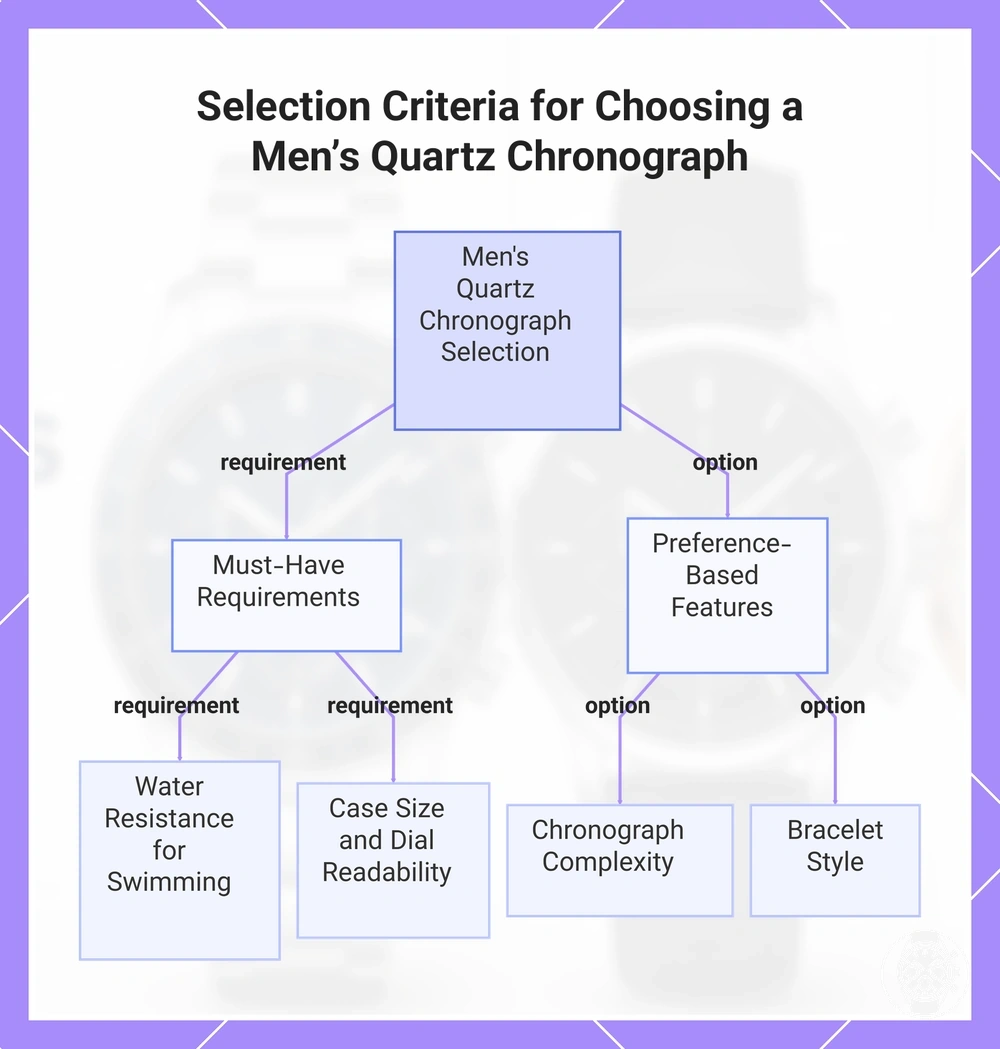
Buyers often compare specifications without deciding which attributes are essential for their own use. A more effective evaluation process is to separate must-have requirements from preference-based features before comparing watches. For example, a buyer planning recreational swimming should prioritise a manufacturer-specified 100 m water-resistance rating, whereas someone choosing a watch mainly for office wear may obtain greater value from an appropriate case size, a clear dial layout, and a comfortable leather strap. This approach reduces unnecessary trade-offs by matching watch attributes to the intended use rather than to appearance alone.
This approach reduces unnecessary trade-offs by matching watch attributes to the intended use rather than to appearance alone.
Selection Criteria for Choosing a Men’s Quartz Chronograph:
- Intended use: Decide whether the watch is primarily for daily wear, dress wear, sport, or recreational water activities before comparing other criteria.
- Case size: Choose a case diameter and overall proportions that suit your wrist size and wearing comfort rather than selecting the largest available watch.
- Dial layout: Select a layout that balances chronograph functionality with visibility and everyday usability.
- Movement expectations: Confirm that the quartz chronograph movement provides the battery-powered operation and maintenance expectations appropriate for your ownership priorities.
- Strap material and durability: Compare leather straps and stainless steel bracelets according to comfort, wear context, and expected durability.
- Water resistance: Match the manufacturer's rating, such as 50 m for everyday water exposure or 100 m for recreational swimming where specified by the manufacturer.
- Budget fit: Prioritise watches that satisfy essential evaluation criteria before paying for preference-based features that do not improve the intended use.
For example, a buyer selecting a watch for daily office use may treat dial readability, case size, and strap comfort as essential criteria, while chronograph complexity or bracelet style remains a personal preference. Separating must-have requirements from preference-based attributes creates a more confident buying decision without implying that one configuration is universally superior. For a complete decision framework, see how to choose a men’s quartz chronograph.
For a complete decision framework, see how to choose a men’s quartz chronograph .
This chart organizes the key selection criteria by separating essential must-have requirements from preference-based features, guiding a structured buying decision.
Movement Type, Dial Layout, Materials, and Comfort
When selecting a men's quartz chronograph watch, movement type, dial layout, case material, strap material, weight, thickness, and readability are the physical and functional criteria that have the greatest influence on everyday satisfaction. According to Seiko, a quartz movement uses a battery-powered quartz crystal oscillator for timekeeping, providing consistent operation with periodic battery replacement rather than manual winding. For example, two watches with the same 42 mm case diameter can feel noticeably different if one uses a heavier stainless steel bracelet and a thicker case, demonstrating that comfort depends on the complete watch configuration rather than on case diameter alone. :contentReference[oaicite:0]{index=0}
Movement type, dial layout, materials, and comfort should be evaluated as practical trade-offs instead of quality rankings.
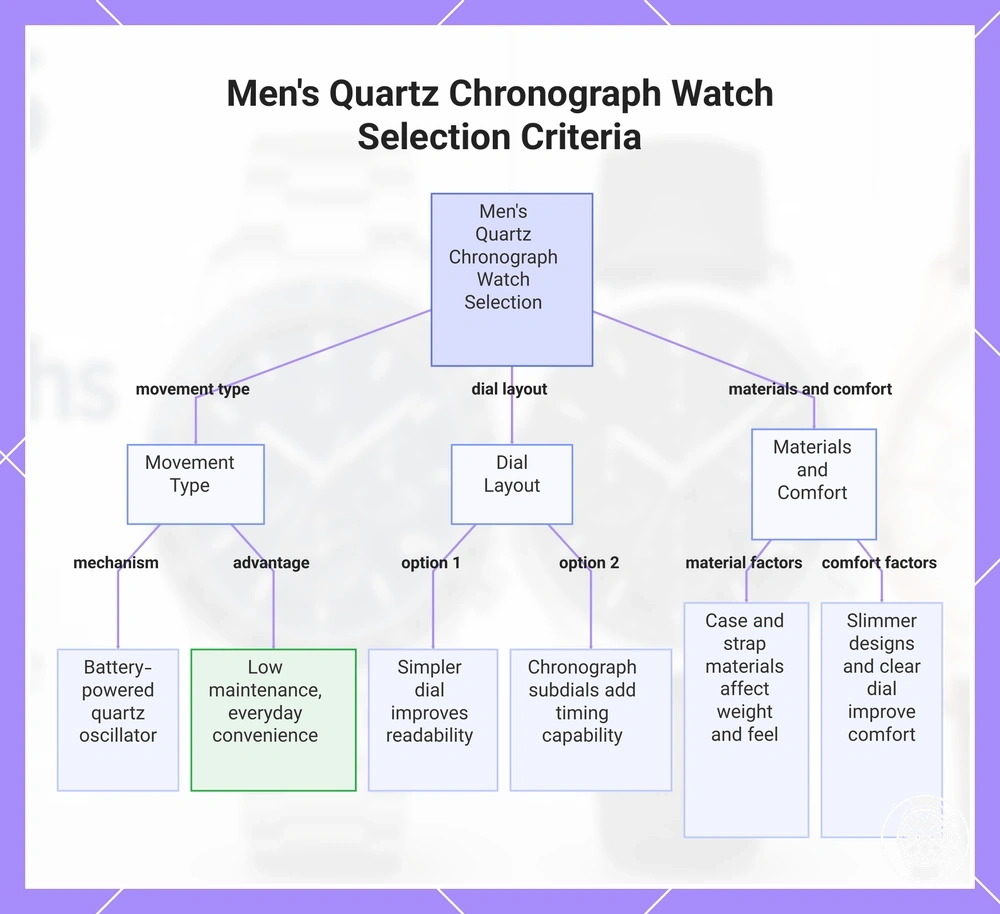
Movement type, dial layout, materials, and comfort should be evaluated as practical trade-offs instead of quality rankings.
- Movement type: A quartz movement provides battery-powered operation and comparatively low routine maintenance, making it suitable for buyers who prioritise everyday convenience.
- Dial layout: A simpler dial layout generally improves readability, while additional chronograph subdials increase timing capability but can reduce visual clarity during quick time checks.
- Case material: Stainless steel offers corrosion resistance and everyday durability, although its higher weight compared with lighter materials may reduce long-term wearing comfort for some users.
- Strap material: Leather straps typically provide a softer skin feel for office or dress wear, whereas stainless steel bracelets generally offer greater resistance to daily wear and easier cleaning.
- Weight and thickness: Greater case weight and thickness increase wrist presence, while slimmer and lighter designs are often more comfortable during extended daily wear, particularly under shirt cuffs.
- Readability: Clear dial contrast, appropriately sized hands, and an uncluttered chronograph layout improve usability, so the most suitable choice is the one that balances movement type, materials, comfort, and readability for the intended wearer rather than maximising any single attribute.
This chart shows the main physical and functional criteria that influence everyday satisfaction when selecting a men's quartz chronograph watch, including movement type, dial layout, materials, and comfort.
Use Case, Durability, and Feature Match
Use case, durability, and feature match determine whether a men's quartz chronograph watch matches the buyer's intended environment, feature requirements, and maintenance tolerance rather than representing a universally suitable choice. Compatibility is achieved by aligning the watch's water-resistance rating, dial visibility, strap comfort, case materials, and maintenance expectations with the planned conditions of use. According to ISO 22810, water-resistance ratings describe resistance under specified laboratory test conditions and must be interpreted within their stated rating context rather than as a waterproof claim. Compatibility therefore depends on the intended use and operating conditions. :contentReference[oaicite:0]{index=0}
Compatibility therefore depends on the intended use and operating conditions.
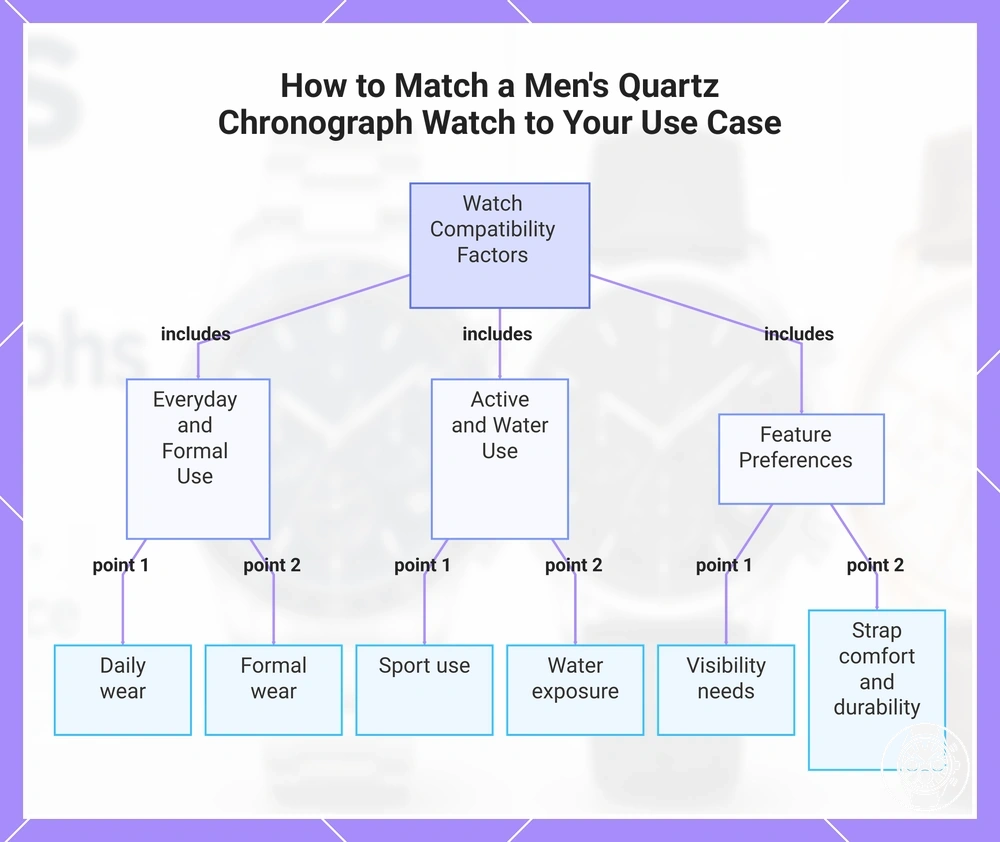
For example, a buyer selecting a watch primarily for office use has different compatibility requirements from someone who regularly exercises outdoors or swims recreationally. A manufacturer-specified 50 m water-resistance rating is commonly intended for everyday exposure such as rain or hand washing, while a 100 m rating is generally specified for recreational swimming, subject to the manufacturer's guidance and ISO 22810. Matching these measurable conditions with durability needs and feature requirements produces a more appropriate feature match than comparing appearance or specifications in isolation.
For example, a buyer selecting a watch primarily for office use has different compatibility requirements from someone who regularly exercises outdoors or swims recreationally.
Use Case, Durability, and Feature Match checklist:
- Daily wear: If the intended use is all-day everyday wear, prioritise balanced case dimensions, clear dial readability, and comfortable strap material to improve long-term comfort.
- Formal wear: If the watch is mainly for business or formal occasions, choose restrained dial design, appropriate strap comfort, and case proportions that fit comfortably beneath a shirt cuff.
- Sport use: If regular timing activities are expected, match chronograph functionality, durable case materials, and strong dial visibility with the planned level of activity instead of assuming every chronograph is equally suitable.
- Water exposure: If the watch will be exposed to water, compare the manufacturer's stated 50 m, 100 m, or higher rating with the intended activity, and always interpret water-resistant terminology within its stated rating context.
- Visibility needs: If reduced-light readability is important, select models with luminous hands and clear dial contrast to improve visibility during evening or indoor use.
- Strap comfort and durability: If comfort is the priority, leather straps commonly suit office and formal environments, while stainless steel bracelets generally provide greater resistance to repeated daily wear.
This chart shows the key factors to consider when matching a watch's features to your intended use, durability needs, and maintenance tolerance.
Price Range, Value, and Best-Option Signals
Price range, value, and best-option signals for a men's quartz chronograph watch are determined by how well the movement, materials, construction, crystal quality, water resistance, dial legibility, battery expectations, warranty context, and feature usefulness match the intended use rather than by price alone. According to ISO 22810, water-resistance ratings such as 50 m and 100 m represent standardised laboratory test classifications for defined exposure conditions, while battery life and warranty duration are manufacturer-specified values that differ by movement and model. The most useful value assessment is therefore criteria-based instead of price-based. :contentReference[oaicite:0]{index=0}
The most useful value assessment is therefore criteria-based instead of price-based.
Comparing watches by price alone often hides the features that create long-term ownership value. A better approach is to compare the price tier against construction quality, crystal quality, water resistance, dial legibility, battery expectations, warranty context, and feature usefulness before considering cost. For example, a watch fitted with sapphire crystal, a stainless steel case, and a manufacturer-rated 100 m water-resistance specification may justify a higher price than a comparable model with mineral crystal and a 50 m rating when the buyer regularly swims, while the lower-priced model may provide better value for office-only use.
| Value Factor | What to Check | Why It Matters | Decision Signal |
|---|---|---|---|
| Price range | Construction quality relative to the price tier | Shows whether materials and build quality justify the cost | Compare value before comparing price |
| Materials | Case material, strap material, and crystal quality | Influences durability, comfort, and scratch resistance | Choose materials that match everyday use |
| Water resistance | Manufacturer-rated 50 m, 100 m, or higher classification | Indicates suitable water-exposure conditions under ISO 22810 testing | Match the rating to the intended activity |
| Feature usefulness | Dial legibility, battery expectations, and warranty context | Supports ownership confidence and practical daily use | Prioritise features used regularly over optional extras |
Suppose two men's quartz chronograph watches differ in price, but only one includes the crystal quality, water resistance, and dial legibility required for everyday use. In that situation, the watch that better matches the intended conditions represents stronger buying value regardless of its position in the price tier. Compare these decision criteria with the price and value guide before evaluating individual models.
Compare these decision criteria with the price and value guide before evaluating individual models.
A common misconception is that a higher-priced men's quartz chronograph watch automatically delivers better value. In practice, value depends on the relationship between price range, materials, construction, ownership expectations, and feature usefulness rather than on price alone. Before comparing specific models, use the buying checklist to confirm that the selected watch satisfies the required criteria.
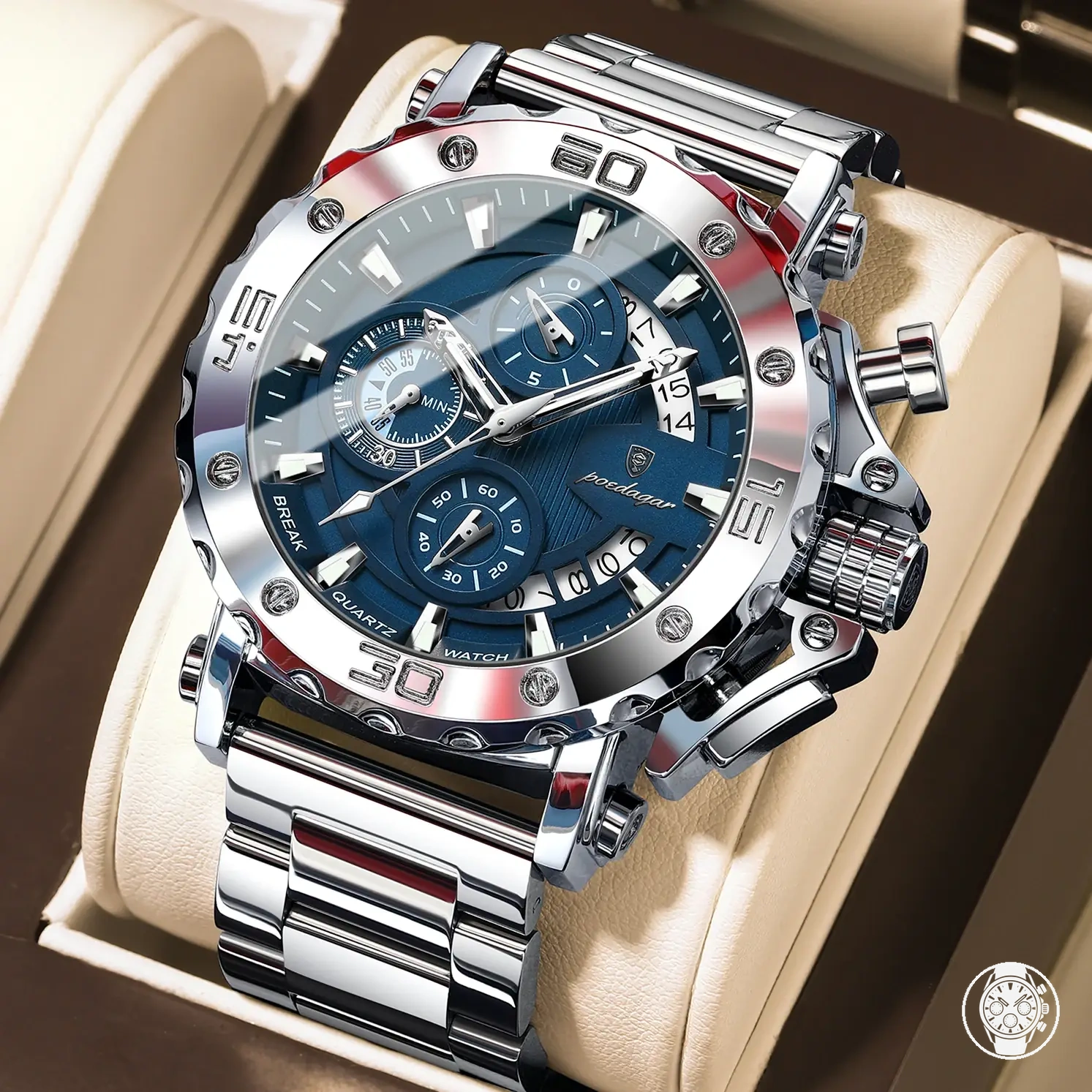
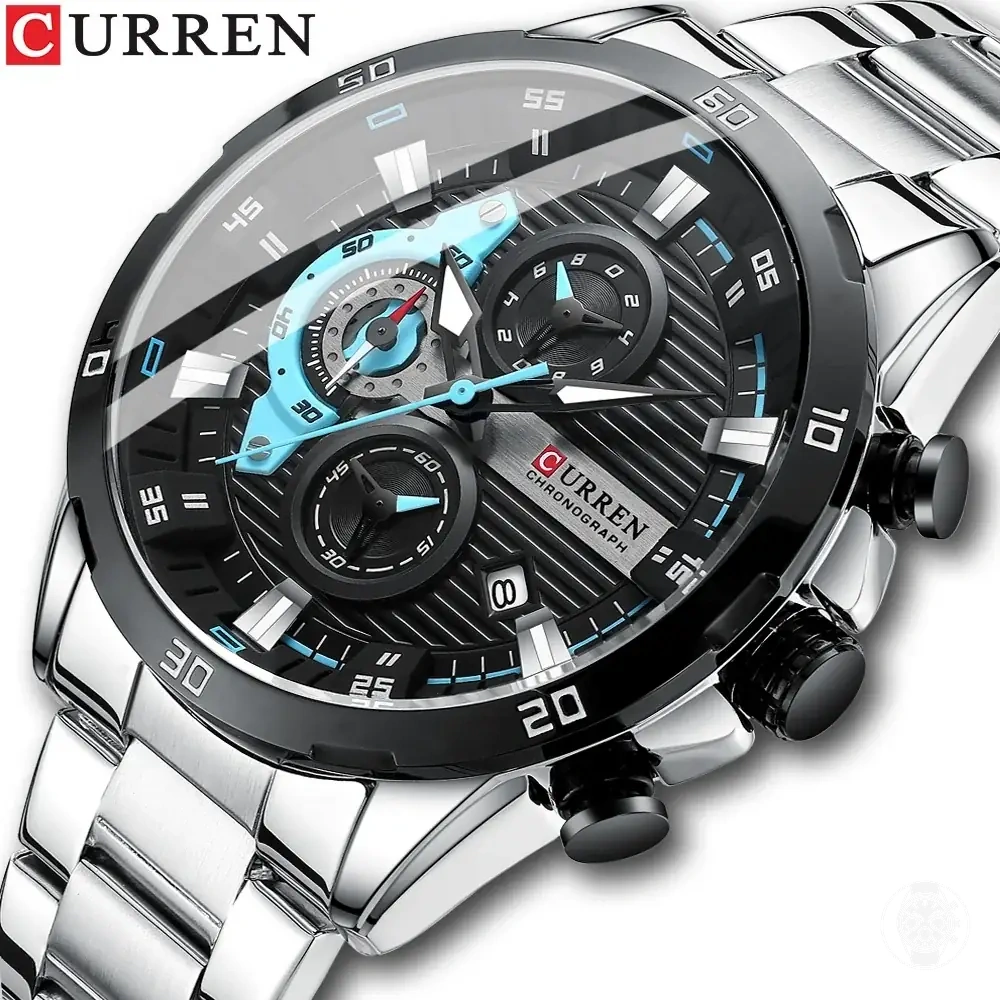
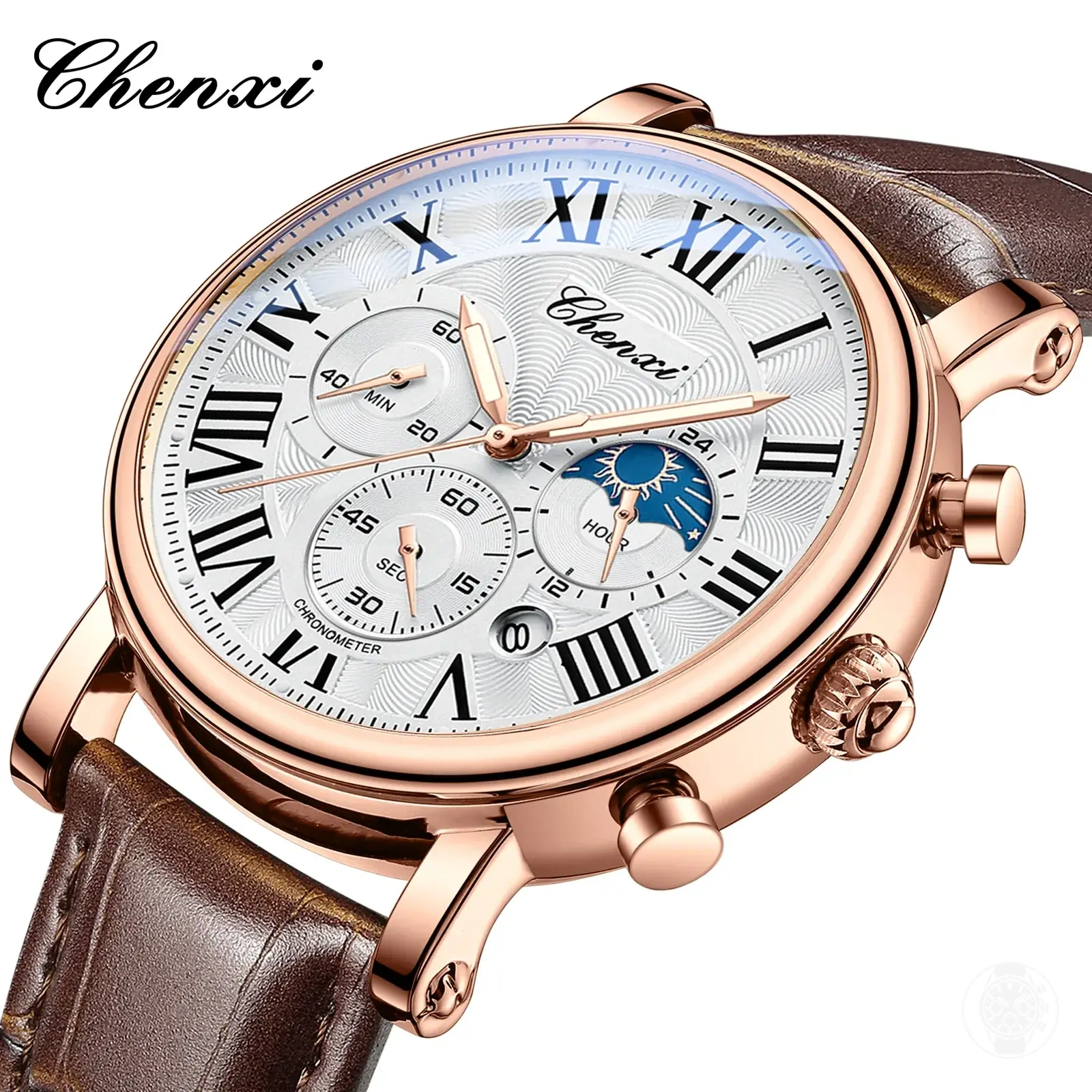
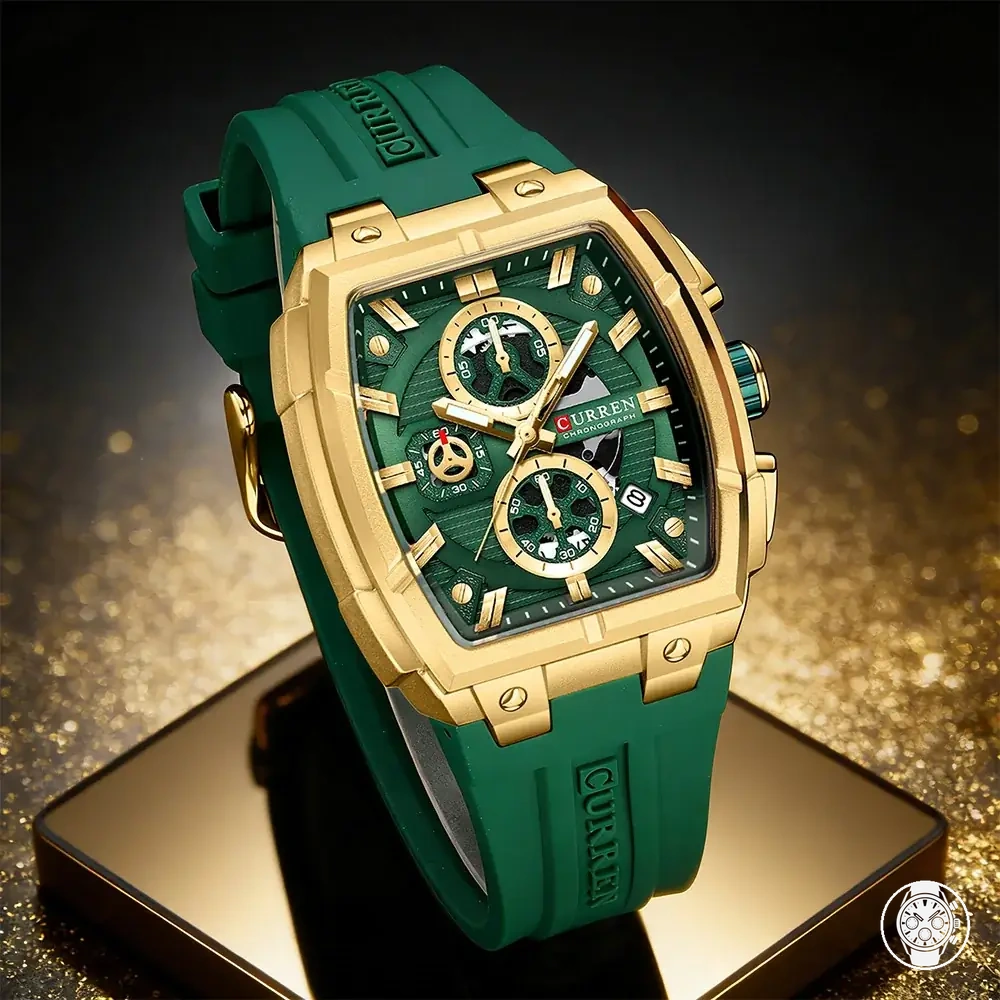
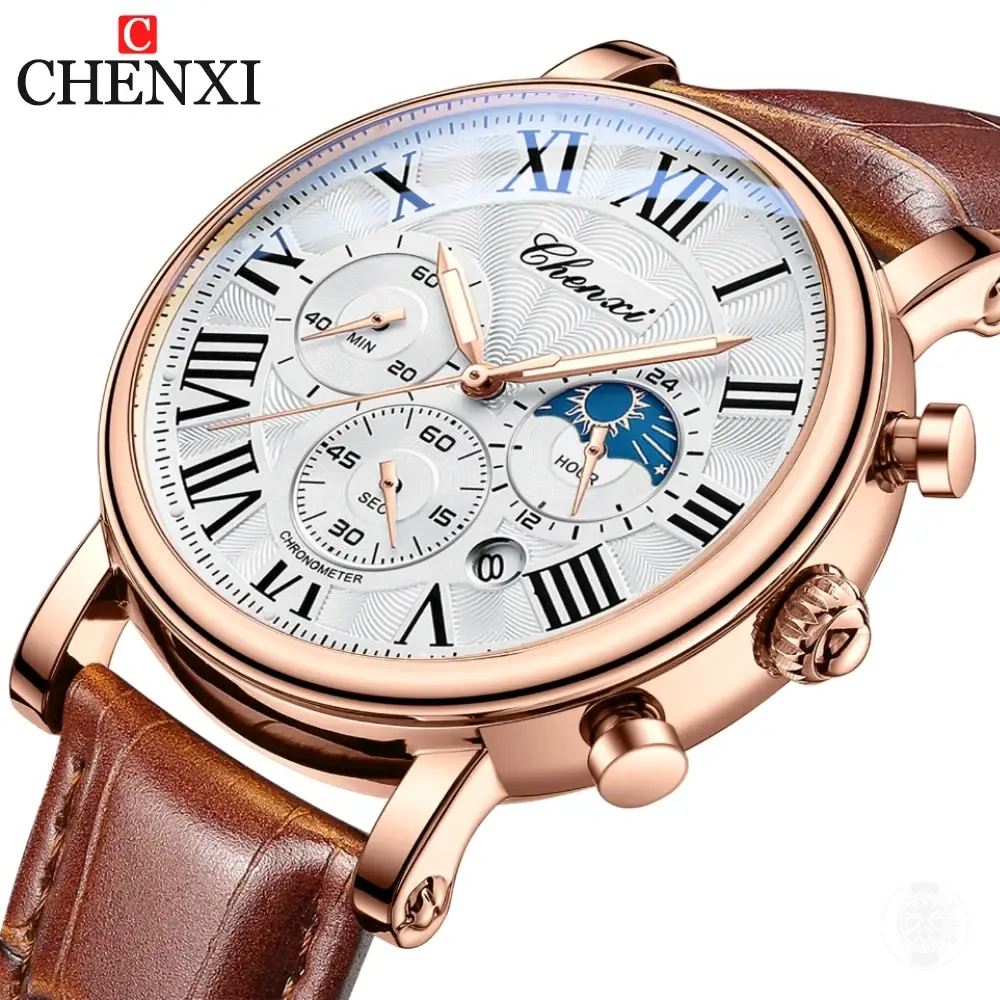
The products below are useful examples for comparing available options.
The products below are useful examples for comparing available options. Before buying, check that the compatibility criteria, key features, and product details match your needs.
Quartz Chronographs Compared With Automatic and Regular Watches
A quartz chronograph differs from an automatic chronograph, mechanical chronograph, and regular watch by combining a battery-powered movement with a stopwatch timing function while offering different maintenance, accuracy, price expectations, and ownership experience. According to Seiko, a quartz movement uses a battery-powered quartz crystal oscillator for time regulation, whereas automatic and mechanical chronographs use mechanical movements powered by a mainspring. This comparison positions each watch type according to practical ownership trade-offs rather than implying that one option is universally superior. :contentReference[oaicite:0]{index=0}
| Watch Type | Main Difference | Maintenance Expectation | Best-Fit Preference |
|---|---|---|---|
| Quartz chronograph | Battery-powered movement with chronograph timing function | Periodic battery replacement and manufacturer-recommended servicing | Buyers prioritising accuracy, convenient ownership, and lower routine maintenance |
| Automatic chronograph | Self-winding mechanical movement with chronograph timing function | Regular mechanical servicing and sufficient wrist wear to maintain the power reserve | Owners who prefer mechanical engineering and automatic operation |
| Mechanical chronograph | Manual-winding mechanical movement with chronograph timing function | Manual winding plus periodic mechanical servicing | Enthusiasts who enjoy traditional manual interaction and mechanical craftsmanship |
| Regular watch | Timekeeping without a chronograph timing function | Maintenance depends on whether the movement is quartz or mechanical | Wearers seeking straightforward everyday time display with a simpler dial |
For example, a buyer who measures 30-minute exercise sessions or meeting durations benefits from the dedicated timing function of a quartz chronograph, whereas a regular watch provides standard timekeeping without elapsed-time measurement. An automatic chronograph or mechanical chronograph may better suit a preference for traditional mechanical ownership despite requiring more routine maintenance, while a quartz chronograph is often the more practical choice when battery-powered accuracy, straightforward ownership experience, and everyday timing functionality are the primary decision criteria.
Common Suitability Questions Before Choosing
Is a quartz chronograph suitable for daily wear?
Is a quartz chronograph suitable for daily wear?
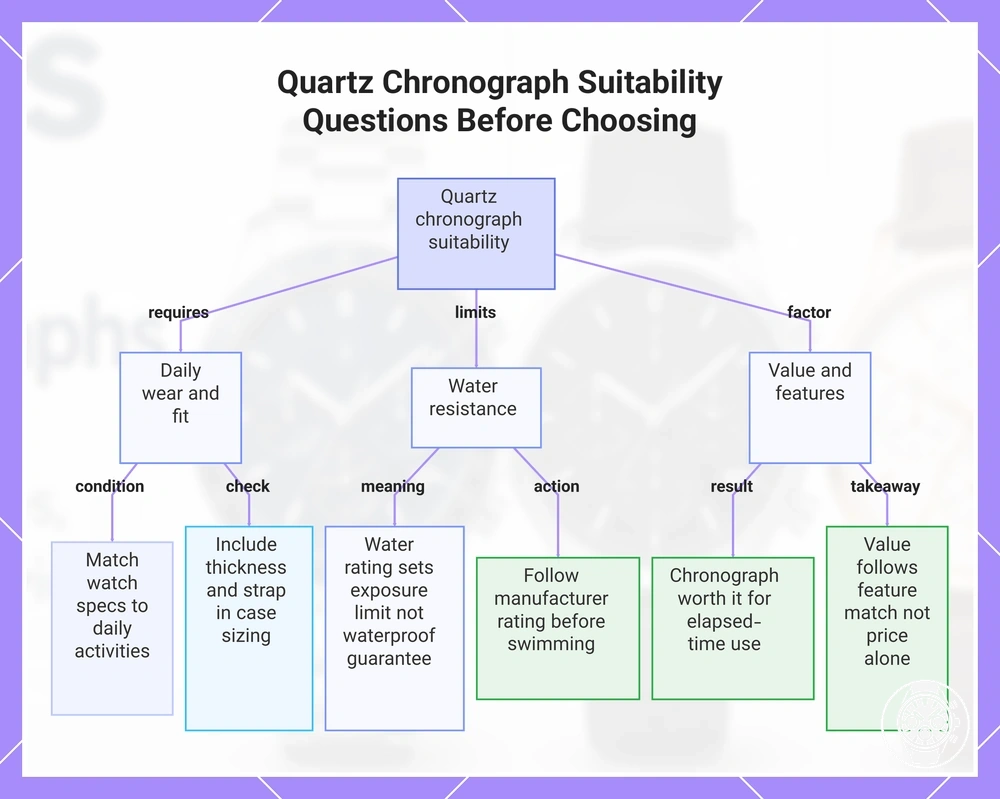
Yes, a quartz chronograph is suitable for daily wear when its case size, strap, and manufacturer-specified water-resistance rating match your normal activities. According to Seiko, quartz movements use a battery-powered quartz crystal oscillator and require periodic battery replacement instead of daily winding, making them practical for routine ownership. Choose a comfortable strap and case size that remain stable on your wrist during extended wear. :contentReference[oaicite:0]{index=0}
Choose a comfortable strap and case size that remain stable on your wrist during extended wear.
Can a quartz chronograph be worn in water?
Yes, but only within the limits of its stated water-resistance rating.
Yes, but only within the limits of its stated water-resistance rating. According to ISO 22810, water-resistance ratings are verified under standardised laboratory test conditions and indicate the intended level of water exposure rather than a waterproof guarantee. Follow the manufacturer's rating before swimming or exposing the watch to water beyond its specified use. :contentReference[oaicite:1]{index=1}
Follow the manufacturer's rating before swimming or exposing the watch to water beyond its specified use.
How do I choose the right case size and fit?
Choose the case size according to your wrist proportion and wearing comfort.
Choose the case size according to your wrist proportion and wearing comfort. A quartz chronograph generally fits better when the lug-to-lug length follows the natural curve of the wrist and the strap holds the case securely without excessive movement. Case diameter should be considered together with thickness and strap fit instead of by itself. :contentReference[oaicite:2]{index=2}
Case diameter should be considered together with thickness and strap fit instead of by itself.
Are chronograph features worth paying for?
Yes, if you regularly use elapsed-time measurement during daily activities.
Yes, if you regularly use elapsed-time measurement during daily activities. For example, timing a 30-minute workout or a 15-minute parking session is easier with dedicated chronograph features than with a standard three-hand watch. If you only read the current time, a regular watch may provide the functions you need with a simpler dial. :contentReference[oaicite:3]{index=3}
If you only read the current time, a regular watch may provide the functions you need with a simpler dial.
Should value be judged by price or features?
This approach helps resolve common suitability questions before choosing a watch.
Value should be judged by how well the watch's features match your intended use rather than by price alone. A quartz chronograph provides stronger buying value when its movement, case size, strap, water resistance, and chronograph features satisfy your daily requirements instead of paying for functions you are unlikely to use. This approach helps resolve common suitability questions before choosing a watch. :contentReference[oaicite:4]{index=4}
Value should be judged by how well the watch's features match your intended use rather than by price alone.
This chart shows the main suitability checks for a quartz chronograph: daily wear and fit, water resistance, and purchase value.